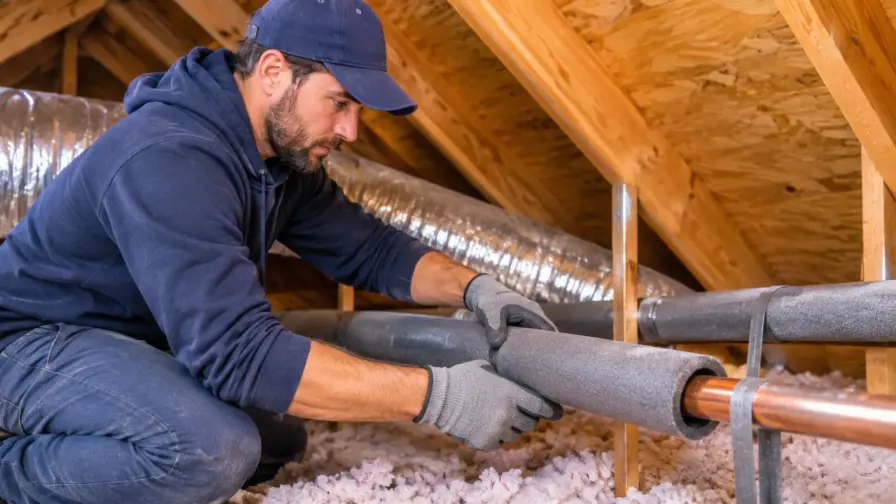
How to protect attic pipes from freezing Houston
Houston homes often run pipes through the attic. Learn how to insulate, drip and shut off water before a freeze, and when to call a plumber.
Houston winters are usually mild, but occasional freezing temperatures can create serious plumbing problems for homeowners. When temperatures drop below 32°F, exposed water pipes can freeze, expand, and eventually burst. A single frozen pipe can cause water leaks, flooding, property damage, and expensive plumbing repairs.
One of the biggest concerns for Houston homeowners is attic plumbing. Many homes, particularly those built on concrete slab foundations, have water supply lines running through attic spaces. Unlike pipes inside heated rooms, attic pipes are exposed to colder air and can freeze quickly during a sudden winter freeze.
Fortunately, preparing your plumbing before temperatures drop can help prevent these problems. In this guide, we explain how to protect attic pipes from freezing in Houston, which insulation materials work best, when to drip faucets, and what to do if your pipes freeze or burst.
Why Houston Homes Are Uniquely at Risk
Houston homes have some plumbing features that make them more vulnerable during unexpected cold weather. Many properties are built on concrete slab foundations without basements or traditional crawl spaces. As a result, plumbing lines may run through walls, ceilings, and attic spaces.
During freezing weather, these exposed pipes can lose heat quickly. Poor insulation, gaps around roof openings, and cold air entering the attic can make the situation worse.
Here are some common reasons Houston homes experience frozen pipes:
- Attic plumbing: Water supply lines running through unheated attic spaces are exposed to cold temperatures.
- Insufficient insulation: Older, damaged, or missing pipe insulation provides little protection against freezing.
- Sudden temperature changes: Houston homeowners may not be prepared for occasional extreme cold spells.
- Cold air leaks: Openings around vents, roof structures, and attic access points can allow cold air to reach plumbing lines.
Identifying exposed pipes before winter arrives can help you take preventive action.
Your 48-Hour Pre-Freeze Plumbing Checklist
When Houston weather forecasts predict freezing temperatures, preparation should begin at least 24–48 hours beforehand.
Follow these steps to reduce the risk of frozen pipes:
- Inspect attic plumbing: Check water supply lines for missing, loose, or damaged insulation.
- Cover exposed pipes: Use suitable foam pipe insulation to protect vulnerable sections.
- Seal air leaks: Check for gaps around attic openings and roof penetrations where cold air can enter.
- Disconnect outdoor hoses: Remove garden hoses and protect exposed outdoor faucets with insulated covers.
- Locate your main water shut-off valve: Make sure every household member knows where it is and how to operate it.
- Prepare indoor faucets: Identify faucets connected to vulnerable plumbing so you can allow a small, steady drip if needed.
- Keep your home warm: Maintain a consistent indoor temperature, even when you are away.
Completing these steps before the temperature drops can help prevent emergency plumbing problems.
How to Insulate Attic Pipes: Materials and DIY Costs
Pipe insulation is one of the most effective ways to reduce the risk of freezing. It slows heat loss and helps keep water inside the pipes from reaching freezing temperatures.
For most accessible residential plumbing, homeowners can consider these materials:
- Foam pipe insulation: Affordable, easy to install, and suitable for many standard water pipes.
- Fiberglass pipe insulation: Provides additional thermal protection when installed correctly and kept dry.
- Rubber pipe insulation: Flexible and useful for pipes with bends, joints, and irregular shapes.
- Heat cables: Thermostatically controlled heat cables can provide additional protection for suitable pipes when installed according to manufacturer instructions.
Before purchasing materials, measure the exposed pipe length and diameter. Pay particular attention to joints, elbows, and connections, as these areas are often overlooked.
DIY insulation costs depend on pipe length, material quality, and whether professional installation is required. You can estimate your home improvement expenses using the HomeSols DIY Renovation Budget Calculator.
If pipes are difficult to access or require electrical heat cables, consider hiring a qualified plumbing professional.
Dripping Faucets and Opening Cabinets: What Actually Works?
Two common recommendations during freezing weather are dripping faucets and opening cabinet doors. Both can help, but they work best when used correctly.
Should I drip faucets during a Houston freeze?
Yes, allowing a small, steady drip can help reduce the risk of freezing in vulnerable plumbing. Moving water is less likely to freeze than standing water under similar conditions.
Focus on faucets connected to pipes running through exterior walls or other unheated spaces. Follow local utility and plumbing guidance during severe freezes, and do not assume dripping alone will protect exposed attic pipes.
Why should you open cabinet doors?
If your kitchen or bathroom pipes are located inside cabinets against exterior walls, opening the doors allows warmer indoor air to circulate around them.
This simple step can help maintain a more stable temperature around vulnerable plumbing.
Remember that dripping faucets and opening cabinets are additional precautions, not replacements for proper pipe insulation.
Where Is Your Main Water Shut-Off Valve?
Knowing where your main water shut-off valve is located can save your home from extensive water damage if a pipe bursts.
In many Houston homes, the main shut-off valve is located near the water meter, along an exterior wall, or in a utility area. Its exact position depends on the property's plumbing design.
Before winter arrives:
- Identify the main shut-off valve.
- Make sure it is accessible and not blocked.
- Learn how to turn it off safely.
- Show other household members where it is located.
If a pipe bursts, shutting off the main water supply can help limit flooding while you arrange professional repairs.
If you plan to leave your property during an extended freeze, consider consulting a plumber about whether shutting off and draining the water system is appropriate for your home.
What to Do If Pipes Freeze or Burst in Houston
Even with proper preparation, pipes can sometimes freeze during severe weather. Acting quickly can reduce the chances of further damage.
If you suspect a frozen pipe:
- Turn on the affected faucet slightly to check whether water is flowing.
- Locate the frozen section if it is safely accessible.
- Apply gentle heat using a hair dryer or warm towels.
- Never use an open flame, blowtorch, or other direct-fire heating equipment.
- Keep the faucet open while the pipe begins to thaw.
- Check for cracks or leaks as water flow returns.
If the frozen pipe is inside an inaccessible attic, wall, or ceiling, contact a professional plumber rather than attempting risky repairs.
If a pipe bursts:
- Immediately shut off the main water supply.
- Turn off electricity in affected areas if water has reached electrical outlets or equipment, but only if you can do so safely.
- Move furniture and valuables away from standing water.
- Avoid using electrical appliances in wet areas.
- Contact a licensed plumber for emergency repairs.
Quick action can help reduce structural damage, water waste, and repair expenses.
When to Hire a Houston Plumber
Some pipe protection tasks are suitable for homeowners, but not every plumbing problem should be handled as a DIY project.
Consider hiring a professional plumber if:
- Your attic contains extensive exposed plumbing.
- You notice cracked, leaking, or damaged pipes.
- Your plumbing system has frozen repeatedly.
- You need professional pipe insulation or heat cable installation.
- You cannot locate or operate your main shut-off valve.
- A frozen pipe is hidden inside a wall or ceiling.
A professional can inspect your plumbing system, identify vulnerable areas, recommend suitable insulation, and help prepare your home for future cold weather. Explore our guide about common plumbing problems.
For reliable plumbing assistance, explore HomeSols Plumber Services to find plumbing solutions for your home.
You can also read our related guide on Dallas plumbing services and Plumbing tips for New Yorkers for additional information about protecting residential plumbing in Texas.
Final Thoughts
Houston may not experience freezing temperatures every winter, but when a cold spell arrives, unprotected attic pipes can become a serious concern. Proper insulation, sealing attic air leaks, dripping vulnerable faucets, and knowing where your main water shut-off valve is located can all help reduce the risk of frozen or burst pipes.
The best time to prepare is before a freeze appears in the forecast. A little prevention today can save you from expensive repairs and unexpected water damage tomorrow.
Take a few minutes to inspect your attic plumbing and make sure your home is ready for the next Houston freeze.
Frequently Asked Questions
Why are attic pipes more likely to freeze in Houston homes?
Attic pipes are exposed to colder air because attics are not heated like living spaces. Poor insulation and sudden temperature drops can increase the risk of frozen plumbing.
How can I protect attic pipes from freezing in Houston?
Install foam or rubber pipe insulation, seal gaps that allow cold air into the attic, inspect exposed plumbing, and maintain a consistent indoor temperature.
Should I drip faucets during a Houston winter freeze?
Yes. Allowing a small, steady drip from faucets connected to vulnerable pipes can help reduce freezing risks by keeping water moving through the plumbing.
What is the best insulation for attic water pipes?
Foam and rubber pipe insulation are popular choices for residential plumbing. The right option depends on pipe size, temperature exposure, and installation conditions.
At what temperature should Houston homeowners worry about frozen pipes?
Homeowners should take precautions when temperatures are forecast to reach 32°F (0°C) or below, particularly when freezing conditions are expected to last several hours.
What should I do if an attic water pipe freezes or bursts?
If a pipe freezes, avoid open flames and apply gentle heat only when the pipe is safely accessible. If it bursts, immediately shut off the main water supply and contact a professional plumber.
When should I hire a professional plumber to protect attic pipes?
Hire a plumber if your attic plumbing is difficult to access, existing insulation is damaged, pipes repeatedly freeze, or you need professional insulation and heat cable installation.
Related Posts

What to Do Before an Emergency Plumber Arrives in NYC
Top 10 Common Plumbing Emergencies
Need a Professional?
Browse verified service providers on HomeSols. From plumbers to electricians, find the right expert for your needs.
Browse Services