How to Estimate Paint for a House
Estimating paint for your house can be straightforward with the right tools and techniques. Discover how to calculate your needs effectively.
How to Estimate Paint for a House
When it comes to painting your house, one of the most critical steps is estimating the amount of paint required. Accurate estimates can save you time, money, and effort. Whether you’re a DIY enthusiast or hiring a professional, knowing how to calculate your paint needs is essential. This guide will walk you through the process of estimating paint for both interior and exterior surfaces, and how tools like the Paint Calculator can make this task easier.
Understanding Paint Coverage
Before diving into the estimation process, it’s important to understand how paint coverage works. Most paint cans will specify the coverage per liter, which typically ranges from 10 to 12 square meters per liter. However, this can vary based on factors such as texture, surface type, and the color being applied.
Steps to Estimate Paint for Your House
Follow these steps to accurately estimate how much paint you’ll need for your project:
Step 1: Measure the Area
The first step in estimating paint is to measure the areas you plan to paint. To do this, you will need a measuring tape and a notepad. Here’s understand with the formula and example
Calculate the Wall Area = Width × Height
For a full room: Total Wall Area = 2 × (Length + Width) × Height
Subtract doors and windows from the total.
Example
Room: 12 ft. × 10 ft., Height: 8 ft.
Walls = 2 × (12+10) × 8 = 352 sq. ft.
Door = 3×7 = 21 sq. ft.
Two windows = 3×4×2 = 24 sq. ft.
Paintable area = 352−21−24 = 307 sq. ft.
Step 2: Determine the Number of Coats
Typically, most paint jobs require two coats for even coverage, especially when changing colors, painting raw surfaces or Most repainting projects require 2 coats. New drywall or major color changes may require primer plus 2 coats
Step 3: Use Paint Coverage Information
Once you have the total square footage and know how many coats you will apply, use the coverage information from your paint can.
For example, if one liter covers 10 square meters and you have 99 square feet (approximately 9.2 square meters), you will need:
Therefore, you would need approximately 2 liters of paint to complete the job.
Step 4: Use the Paint Calculator
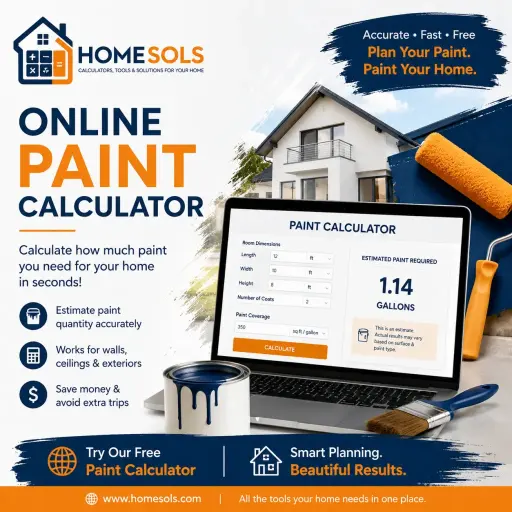
To simplify your calculations, consider using our Paint Calculator. This tool allows you to input the dimensions of your space and instantly provides an estimate of how much paint you need, taking into account the number of coats and the specific paint coverage.
Estimating Paint for Exterior Surfaces
Estimating paint for the exterior of your house involves similar steps, but there are additional factors to consider:
Step 1: Measure the Exterior Walls
Measure the height and width of each wall, including any architectural features such as eaves or overhangs. Make sure to include:
Measure the Wall Areaof each exterior wall, including gable ends and other paintable sections, then subtract the area of windows, doors, and large unpainted openings. If you're painting trim, soffits, fascia, shutters, or garage doors, measure those separately, as they often require different paint and coverage estimates.
Step 2: Consider Surface Type
Exterior surfaces can vary greatly in texture. Consider if your house has:
- Smooth siding, which typically requires less paint.
- Wood siding, which may absorb more paint depending on its condition.
- Brick, stucco, or concrete, as rough and porous surfaces usually require more paint than smooth ones.
- Fiber cement or textured finishes, which often need additional paint due to their uneven surface.
Each type has different absorption rates, which can affect how much paint you need.
Step 3: Account for Weather Factors
Weather can impact your paint job. Ensure you:
- Paint during dry weather with no rain expected for at least 24 hours.
- Avoid painting in extreme heat, cold, or high humidity, as these conditions can affect drying and adhesion.
- Check the manufacturer's recommended temperature range, which is typically 50°F–85°F (10°C–29°C) for most exterior paints.
- Avoid painting in direct sunlight whenever possible to prevent uneven drying and visible brush or roller marks.
Step 4: Use the Paint Calculator for Exteriors
Again, the Paint Calculator can help streamline your estimates by accounting for the specific conditions of your exterior surfaces.
Common Mistakes to Avoid
When estimating paint for your house, it's easy to make errors. Here are some common pitfalls to avoid:
- Not subtracting doors/windows
- Ignoring primer
- Using one-coat estimate
- Not adding 10% extra paint
- Ignoring textured surfaces
Final Thoughts
Estimating paint for your house doesn’t have to be a daunting task. With the right approach and tools, you can ensure your project runs smoothly and efficiently. Don’t forget to utilize our Paint Calculator for accurate, quick estimates that cater to your specific painting needs.
Hire Professional painters in Atlanta, Albuquerque
Ready to start your painting project? Use the Paint Calculator today and make your estimation process a breeze!
Useful Internal Resources
Explore expert blog posts, trusted local services, area guides to continue your research.
Related reads: Paint Calculator, Calculators directory, All tools hub.
Frequently Asked Questions
How do I measure my walls for paint?
Measure the height and width of each wall, then multiply these dimensions to get the square footage. Don't forget to subtract areas for windows and doors.
What factors affect paint coverage?
Factors include surface texture, color change, type of paint, and environmental conditions like humidity.
How can I avoid running out of paint?
Use the Paint Calculator to accurately estimate your needs and consider buying a little extra for touch-ups.
Is it necessary to use a primer?
Using a primer is recommended when changing colors significantly or painting raw surfaces to ensure better adhesion and coverage.
Can I use the Paint Calculator for exterior paint jobs?
Yes, the Paint Calculator is designed to provide estimates for both interior and exterior painting projects.
Related Posts




Need a Professional?
Browse verified service providers on HomeSols. From plumbers to electricians, find the right expert for your needs.
Browse Services