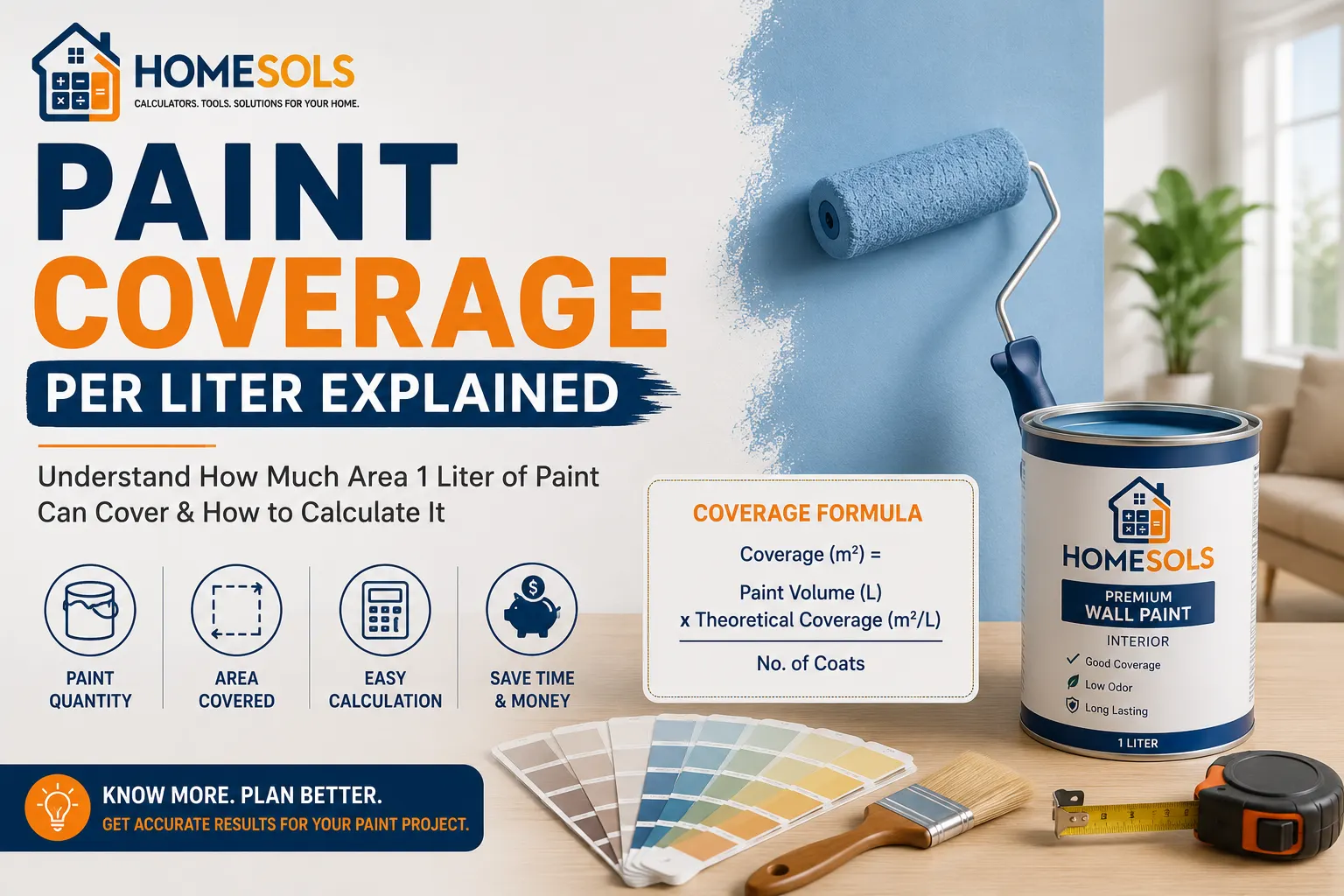
Paint Coverage Per Liter Explained
Learn how to calculate paint coverage per liter and effectively use our Paint Calculator to plan your painting projects.
Paint Coverage Per Liter Explained
Painting can transform your space, but calculating how much paint you need can often feel overwhelming. Understanding paint coverage per liter is crucial for any DIY enthusiast or professional painter. It not only ensures that you purchase the right amount of paint but also helps you save money and reduce waste. In this comprehensive guide, we will delve into the details of paint coverage, how to calculate it, and the resources available to help you make informed decisions, including our Paint Calculator.
What is Paint Coverage Per Liter?
Paint coverage per liter refers to the area that one liter of paint can effectively cover. This measurement varies based on several factors, including the type of paint, the surface being painted, and the application method.
Factors Influencing Paint Coverage
How to Calculate Paint Coverage Per Liter
Calculating paint coverage per liter involves a simple formula, but there are several steps before you get to that point.
Step 1: Measure the Area to be Painted
Start by determining the total area of the surface you plan to paint. If you’re painting a wall, measure the height and width, then multiply these numbers to get the area in square meters (m²).
Step 2: Determine the Coverage of Your Paint
Most paint cans provide coverage information, typically measured in square meters per liter. This number indicates how much area one liter of paint will cover. For example, if a paint can states it covers 10 m² per liter, this means you will need 1 liter of paint for every 10 m² of surface area.
Step 3: Calculate the Amount of Paint Needed
To find out how much paint you need, divide the total area by the coverage rate of the paint. For instance, if you have a 50 m² wall and your paint covers 10 m² per liter, you would need:
Amount of Paint Needed = Total Area / Coverage Rate
Amount of Paint Needed = 50 m² / 10 m²/liter = 5 liters
Using the Paint Calculator
While manual calculations are helpful, using an online Paint Calculator can simplify the process significantly. Our Paint Calculator takes into account various factors, such as surface type and the number of coats required, to give you a precise estimate of how much paint you will need.
Benefits of Using the Paint Calculator
Understanding Coverage for Different Surfaces
Different surfaces have unique characteristics that affect how paint adheres and covers. Here’s a breakdown of how coverage can vary across common surfaces:
1. Drywall
Drywall is one of the easiest surfaces to paint. Typically, a liter of paint covers around 10-12 m². For best results, use a primer first, especially if you’re painting a lighter color over a darker one.
2. Wood
Wood surfaces can absorb paint differently based on their texture and treatment. Unfinished wood may require more paint, with coverage ranging from 8-10 m² per liter, while finished wood can have better coverage.
3. Metal
Metal surfaces, like fences or railings, often require a specific type of paint designed for metal. Coverage is typically around 8-10 m² per liter, depending on the paint type and surface prep.
4. Concrete
Concrete surfaces can be more challenging due to their porous nature. Coverage can range from 6-8 m² per liter, so it’s advisable to use a primer specifically formulated for concrete.
5. Textured Surfaces
Textured surfaces like stucco can significantly reduce paint coverage due to their irregularities. Expect coverage to drop to around 4-6 m² per liter, and plan accordingly.
Common Mistakes in Paint Coverage Calculation
Even experienced painters can make mistakes when calculating paint needs. Here are some common pitfalls to avoid:
Conclusion
Understanding paint coverage per liter is essential for any painting project. By measuring your space, knowing your paint’s coverage, and using tools like our Paint Calculator, you can ensure that you are fully prepared for your painting endeavors. Don’t leave your project to chance—accurately estimate your paint needs today and avoid unnecessary expenses. Start planning with our Paint Calculator and achieve the perfect finish for your home!
Useful Internal Resources
Explore expert blog posts, trusted local services, area guides to continue your research.
Related reads: Paint Calculator, Calculators directory, All tools hub.
الأسئلة الشائعة
What factors affect paint coverage per liter?
Factors include the type of paint, surface texture, application method, and color.
How can I calculate how much paint I need?
Use Homesols Paint calculator to measure the area to be painted, check the coverage of your paint, then divide the area by the coverage rate.
What is the average coverage of paint per liter?
On average, paint covers between 8 to 12 m² per liter, depending on the type of paint and surface.
Is it better to use a paint calculator?
Yes, a Homesols Paint calculator can provide more accurate estimates and take various factors into account.
How do I account for wastage when buying paint?
It's recommended to add about 10% to your total paint requirement to account for spills and errors.
Related Posts


Need a Professional?
Browse verified service providers on HomeSols. From plumbers to electricians, find the right expert for your needs.
Browse Services