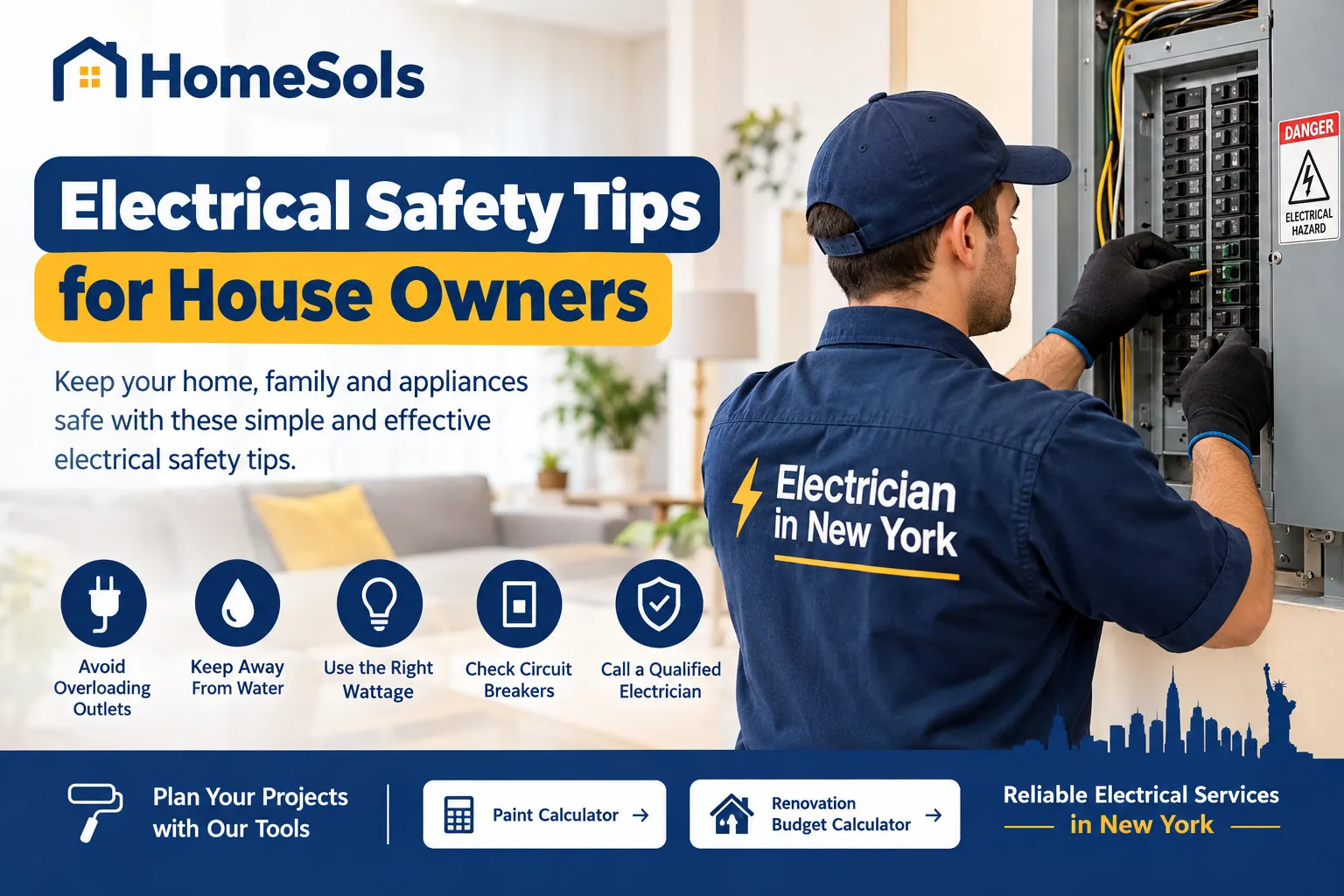
Electrical Safety Tips for House Owners
Electrical safety starts with simple habits. Learn easy tips to protect your home, family, and appliances from common electrical hazards.
Electrical Safety Tips for House Owners
Electricity makes everyday life easier, but it can also become dangerous when electrical systems are damaged, overloaded, or used incorrectly. A small electrical problem can sometimes lead to electric shocks, damaged appliances, or even a house fire.
The good news is that many electrical problems can be prevented with a few simple safety habits. Whether you live in an apartment, an old house, or a newly renovated property, these electrical safety tips can help you keep your home and family safer.
1. Do Not Overload Electrical Outlets
Plugging too many appliances into one outlet can put too much load on the electrical circuit. This is especially common when using extension cords, power strips, or multiple high-power appliances together.
Avoid connecting appliances such as heaters, microwaves, air conditioners, and other high-power devices to the same outlet.
If an outlet regularly becomes warm, makes unusual sounds, or shows signs of damage, stop using it and have it checked by a qualified electrician.
2. Replace Damaged Wires and Cords
Check the power cords of your appliances from time to time. Look for cuts, exposed wires, melted areas, or damaged plugs.
Never use a cable with exposed wiring. Do not cover a seriously damaged wire with tape and continue using it. Replacing the damaged cord or having it professionally repaired is much safer.
Keep electrical cords away from water, heat sources, and areas where they can easily be stepped on or damaged.
3. Keep Electricity Away From Water
Water and electricity are a dangerous combination. Keep electrical appliances away from sinks, bathtubs, showers, and other wet areas.
Never touch an electrical appliance, switch, or plug with wet hands. If an electrical device falls into water, do not immediately reach for it. Turn off the power from a safe location first.
Bathrooms and kitchens need extra attention because water is commonly present in these areas.
4. Use the Right Wattage for Light Fixtures
Always use bulbs that are suitable for the light fixture. Using a bulb with a higher wattage than recommended can cause excessive heat and may damage the fixture.
LED bulbs can be a useful option because they generally use less electricity and produce less heat than traditional incandescent bulbs.
If a light fixture frequently flickers, becomes unusually hot, or trips the circuit breaker, it should be inspected.
5. Pay Attention to Circuit Breakers
Circuit breakers are an important part of your home's electrical safety system. They help protect electrical circuits when there is an overload or short circuit.
If a breaker trips occasionally, there may be a temporary overload. However, if it keeps tripping, do not simply reset it again and again.
Frequent breaker trips can indicate an electrical problem that needs professional attention.
6. Be Careful With Extension Cords
Extension cords are useful for temporary situations, but they should not normally be used as a permanent replacement for proper electrical outlets.
Avoid running extension cords under carpets, through doors, or in places where they can be damaged. Also, never connect multiple extension cords together to reach a distant appliance.
If you regularly need extension cords in one area of your home, consider having an additional outlet installed by a professional.
7. Keep Electrical Panels Accessible
Your electrical panel should always be easy to reach. Do not place furniture, boxes, or storage items directly in front of it.
Make sure household members know where the main electrical panel is located and understand how to safely turn off the power during an emergency.
If you notice burning smells, unusual sounds, scorch marks, or excessive heat around the panel, contact a qualified electrician.
8. Be Extra Careful During Home Renovation
Home renovation often involves changes to walls, ceilings, floors, kitchens, and bathrooms. Before drilling into walls or removing sections of a wall, make sure you understand where electrical wiring may be located.
Electrical work should not be treated as a DIY task if you are not properly trained. Incorrect wiring can create serious safety risks.
Before starting a renovation, you can also use a Renovation Budget Calculator to estimate your expected project costs and plan your home improvement work.
9. Check Smoke and Carbon Monoxide Alarms
Smoke alarms can provide an early warning if a fire starts in your home. Test your alarms regularly and replace their batteries when needed.
If your home has carbon monoxide alarms, check them according to the manufacturer's instructions as well.
These small devices can provide valuable protection for your family.
10. Know When to Call an Electrician
Some electrical problems should always be handled by a qualified professional. Call an electrician if you notice:
- Burning smells near outlets or switches
- Sparks or smoke from an outlet
- Frequent circuit breaker trips
- Flickering lights throughout the house
- Warm or discolored outlets
- Buzzing or crackling sounds
- Exposed electrical wires
- Electrical shocks or tingling sensations
- Problems with the main electrical panel
For homeowners looking for an Electrician in New York, professional help can make it easier to identify electrical problems and carry out repairs safely.
Plan Your Home Improvement Projects Carefully
Electrical safety is only one part of maintaining a safe and comfortable home. If you are planning painting, repairs, remodeling, or other improvements, proper planning can help you control your expenses.
You can use a Paint Calculator to estimate how much paint you may need for your project. For larger renovation projects, the Renovation Budget Calculator can help you create a basic cost estimate before you begin.
Final Thoughts
Electrical safety does not always require complicated work. Simple habits such as avoiding overloaded outlets, replacing damaged cords, keeping electricity away from water, and paying attention to warning signs can make a big difference.
Most importantly, never take serious electrical problems lightly. If you are unsure about an electrical issue, it is safer to have it inspected by a qualified professional rather than attempting a risky repair yourself.
A little attention and regular maintenance can help protect your home, your appliances, and the people who live there.
الأسئلة الشائعة
What is the most important electrical safety tip for homeowners?
Avoid overloading electrical outlets, keep damaged wires out of use, and address electrical problems as soon as you notice them.
How can I tell if an electrical outlet is unsafe?
Warning signs include heat, burn marks, unusual sounds, sparks, loose connections, or a burning smell. Stop using the outlet and have it inspected by a qualified electrician.
Why does my circuit breaker keep tripping?
A frequently tripping breaker may be caused by an overloaded circuit, a short circuit, or another electrical problem. If it keeps happening, contact a professional electrician instead of repeatedly resetting it.
Is it safe to use extension cords all the time?
Extension cords are generally intended for temporary use. If you regularly need one in a particular area, consider having a proper electrical outlet installed.
Can I do electrical repairs myself?
Simple tasks such as replacing a light bulb are usually straightforward, but wiring, electrical panels, outlets, and other major repairs should be handled by a qualified electrician.
When should I call an electrician in New York?
You should consider professional help if you notice flickering lights, burning smells, sparks, exposed wires, damaged outlets, repeated breaker trips, or other unusual electrical problems.
How can I make my home safer during renovation?
Before drilling, removing walls, or making major changes, identify where electrical wiring may be located. For electrical modifications, use a qualified professional to reduce the risk of shocks, short circuits, and fires.
How can I estimate the cost of a home renovation?
You can use a Renovation Budget Calculator to create a basic estimate before starting your project. A Paint Calculator can also help estimate the amount of paint needed for painting work.
Related Posts

Affordable Electrical Services in the US: What You Need to Know

Electrical Safety Tips Every Dubai Homeowner Should Know
Need a Professional?
Browse verified service providers on HomeSols. From plumbers to electricians, find the right expert for your needs.
Browse Services